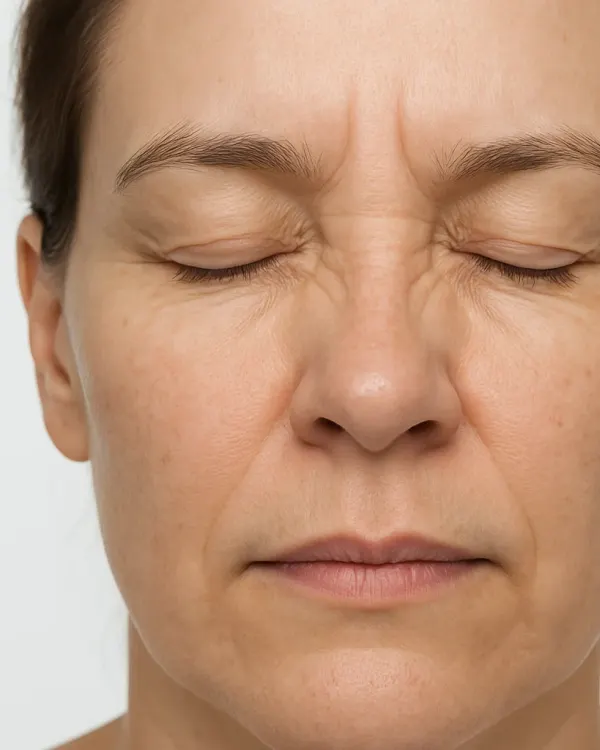
Bunny Lines Explained
01Nasal Anatomy and Muscle Function
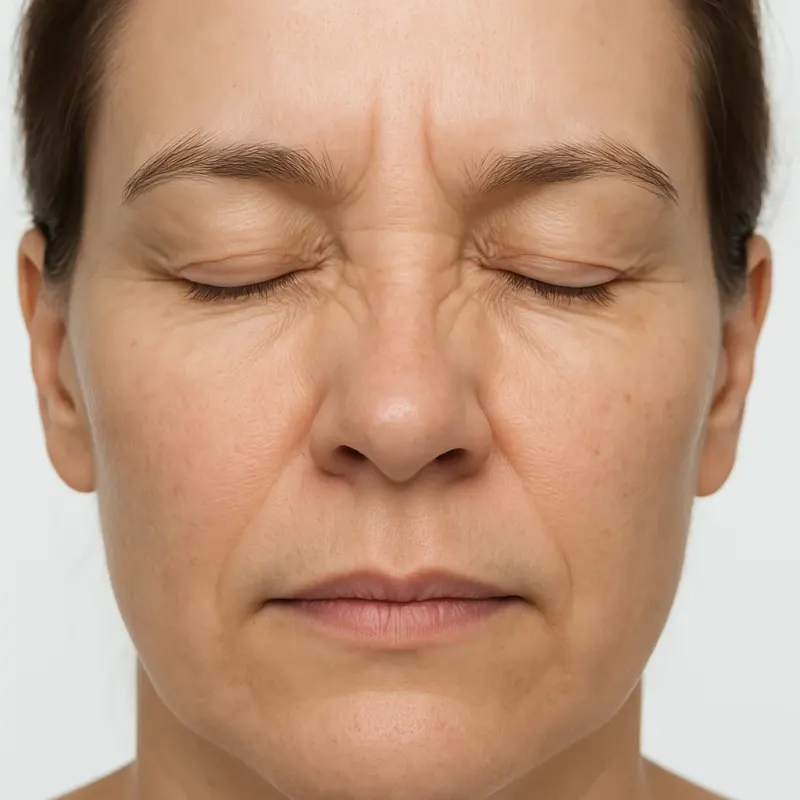
The nasalis is a small yet expressive muscle that plays a key role in nasal movement. It has two parts, one compresses the nostrils, the other flares them, and both can contribute to bunny lines depending on individual expression patterns.
Because the nose is structurally complex and central to breathing, treatments in this area demand anatomical precision. A clear understanding of how the nasalis works in coordination with surrounding muscles allows for correction that’s effective yet invisible.
Maintaining proper nasal function while reducing lines requires a light touch and detailed anatomical knowledge, especially around the nerves and small blood vessels in this area.
02Treatment Methodology
Comprehensive Assessment
Each treatment begins with a close evaluation of the nose and mid-face. This includes assessing skin texture, line depth, muscle movement, and how expressions affect the area. Smile and laugh patterns are considered to understand how much the nasalis contributes to dynamic lines.
Subtle differences between individuals, such as the prominence of the nasalis or interplay with adjacent muscles, are taken into account to ensure the plan fits your face, not a template.
Precise Injection Technique
Treating bunny lines usually involves one or two injection points per side, placed with care to relax the overactive muscle fibres without interfering with nasal function. Accurate placement is essential, too much product or incorrect depth could affect breathing or natural expression.
Refined techniques and advanced dosing allow for subtle correction. The result is a smoother appearance at rest and in motion, with no stiffness or unnatural effects.
03Treatment Outcomes and Benefits
You may notice small injection marks immediately after treatment, which usually fade within a few hours. Within a week or so, lines begin to soften, particularly during expression. The nose appears more refined, and the mid-face looks smoother and more harmonious.
Natural nasal function is fully preserved. Breathing, smell, and expression remain unaffected, while fine wrinkles are gently minimised. Results typically last three to four months and can be easily maintained with regular visits.
04Integration with Facial Rejuvenation
Upper Face Coordination
Bunny lines treatment is often part of a broader facial plan. Combining it with forehead, glabellar (frown), or crow’s feet treatments ensures that the entire upper face moves naturally and appears balanced. This approach prevents any one area from appearing untreated or out of sync.
Mid-Face Enhancement
Smoothing lines at the sides of the nose pairs well with treatments targeting volume loss or texture concerns in the cheeks and tear troughs. Addressing multiple signs of ageing together can produce a more cohesive and long-lasting rejuvenation, particularly for patients seeking refined, natural results.
05Safety and Precision
Anatomical Considerations
Treating the nasal area requires particular care due to its proximity to sensitive structures. Injections must avoid key vessels and ensure there’s no interference with normal nasal function. Detailed knowledge of the region allows for safe, effective placement without compromising comfort or results.
Technique Refinement
Advanced injection techniques are used to deliver treatment with precision, adjusting needle depth, angle, and volume based on each individual’s anatomy. High-quality products such as Bocouture by Merz are used to ensure predictable, subtle outcomes.
Thorough consultation and aftercare guidance are provided to support healing and maintain results. The approach is cautious, personalised, and focused on creating visible improvement with minimal intervention.