
- Home
- Blog
- Medical Treatments
- Bell’s Palsy After Recovery: Treating Facial Asymmetry and Synkinesis
Medical Treatments · Treatment Guides
Bell’s Palsy After Recovery: Treating Facial Asymmetry and Synkinesis
Bell’s Palsy: Treating What It Leaves Behind
What botulinum toxin can and cannot do for facial asymmetry and synkinesis after recovery.
Most people who get Bell’s palsy recover from it. The NHS position is that the majority make a full recovery, usually inside nine months. This guide is for the minority who do not, and for the people whose face works again but no longer works evenly: a smile that pulls the eye half shut, a cheek that tightens when they eat, one side that has quietly become the stronger of the two.
At Dr Harry Clinic, an aesthetic and medical aesthetic clinic in Chiswick and Covent Garden, London, Bell’s palsy is one of five medical uses of botulinum toxin we treat. This guide is from Dr Harry James, a GMC registered aesthetic doctor and aesthetic medicine trainer, and it is deliberately clear about the limits as well as the uses.
Quick answer: Botulinum toxin does not treat Bell’s palsy itself and it does not repair the facial nerve. It treats what the illness can leave behind once recovery has settled. It has two separate jobs: relaxing the unaffected side so the two halves of the face move closer to matching, and reducing synkinesis, the crossed wiring that makes the eye narrow when you smile or the neck band tighten when you speak. Effects appear within days to two weeks and typically last three to six months, so treatment is repeated rather than permanent. At this clinic it is priced from £475, after a £75 consultation, and the usual repeat interval is every three to four months.
If it has just happened, this is not the page you need
New one sided facial weakness is an urgent medical matter, not an aesthetic one. The NHS advice is to see a GP as soon as possible, and steroid treatment works best when it is started inside the first 72 hours. Sudden facial weakness can also be a sign of a stroke, which is why it needs assessing the same day rather than the same week.
We do not treat acute Bell’s palsy. An aesthetic clinic is the wrong door in the first weeks. Go to your GP, or to A and E if the weakness came on suddenly and there is any weakness in an arm or leg, any trouble speaking, or any change in vision. Come back to this page months later, when your recovery has settled and you can see what it has left.
What Bell’s palsy leaves behind
Bell’s palsy is a weakness of the facial nerve on one side. While the nerve is not working properly, the muscles it supplies go quiet: the brow does not lift, the eye does not close fully, the mouth corner does not rise. The other side of the face carries on exactly as before, and that is where the visible problem starts.
Two things then happen at once. The unaffected side, working alone, becomes relatively stronger and pulls across the midline. And when the nerve does recover, the fibres do not always find their way back to the same muscles they left.
| What you notice | What is behind it |
|---|---|
| The smile is uneven, and the good side does most of it | The unaffected side is pulling unopposed across the midline |
| The eye narrows when you smile or eat | Synkinesis between the mouth muscles and the muscle that closes the eye |
| The cheek or neck feels tight through the day | Low grade continuous co-contraction rather than a single movement |
| The affected brow sits lower than the other | Residual weakness in the frontalis on that side |
| The face looks fine at rest and wrong in photographs | The asymmetry is dynamic, so it only shows on movement |
Synkinesis, and why it appears months later
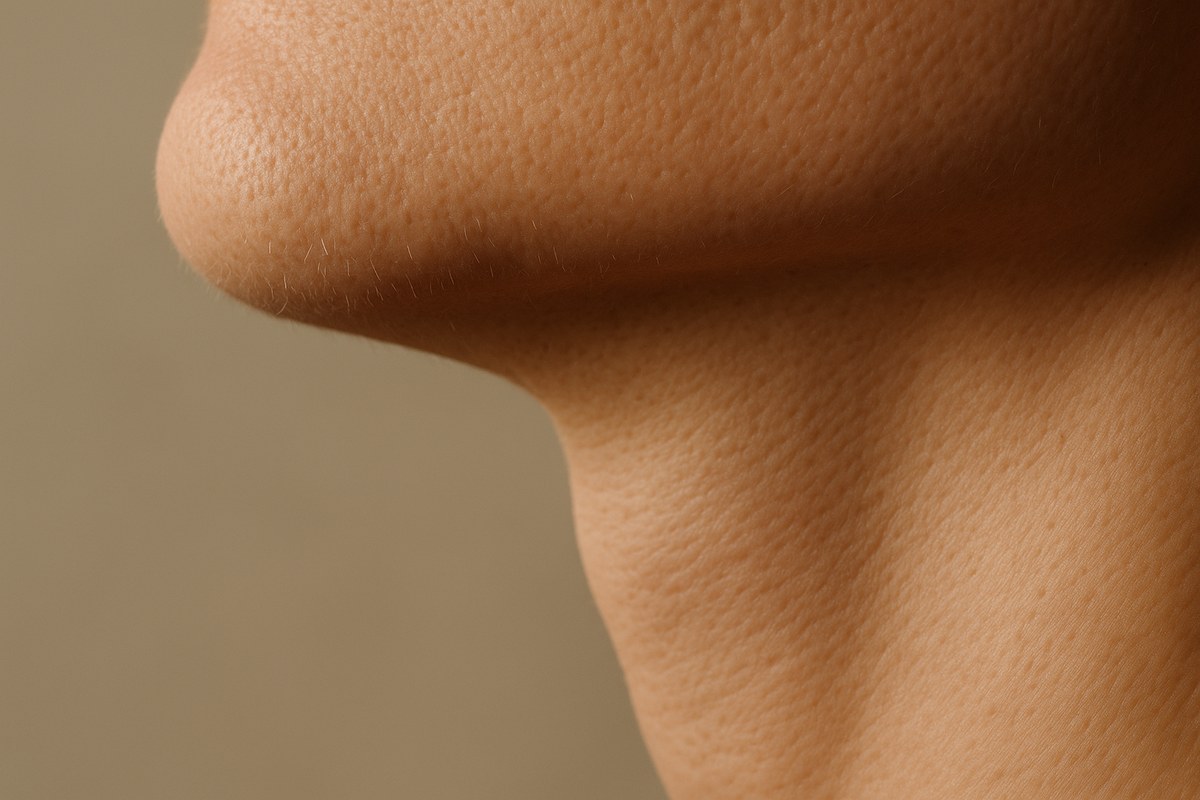
Synkinesis is movement you did not ask for. A regenerating nerve fibre that used to run to the mouth reconnects instead to the muscle that closes the eye, so every smile now half closes it. It is the reason people are sometimes more troubled at nine months than at three: the face has come back, and it has come back miswired.
This is also why it cannot be fixed by working the face harder. Repeating a movement that fires two muscles at once trains both of them. Facial retraining therapy from a specialist physiotherapist teaches the opposite, small isolated movements, and it is the treatment that changes the pattern rather than the symptom. Botulinum toxin quietens the muscle that is firing when it should not, which is what makes the retraining possible to do.
The two jobs botulinum toxin does here
They are different jobs on different sides of the face, and it is worth knowing which one is being proposed for you.
| Side treated | What is targeted | What changes |
|---|---|---|
| The unaffected side | Overactivity in the muscles that are pulling unopposed | The stronger side moves less, so the two halves land closer together, at rest and on movement |
| The affected side | Synkinesis, the crossed co-contraction | The eye stays open through a smile, and the tightness through the cheek and neck eases |
The first of those often surprises people, because it means injecting the side of the face that works. That is the point. You cannot make a weak muscle strong with botulinum toxin, so symmetry is bought by turning the loud side down rather than the quiet side up.
Doses in this work are small and placed with a lot more care than a cosmetic treatment needs, because the margin between calming a muscle and flattening a smile is narrow. This is the same micro dosing thinking used in our micro droplet technique, applied to a functional problem.
When to treat, and when to wait
An opinion, and it is one that costs us appointments. If your Bell’s palsy is recent and still changing week to week, waiting is the right answer. A face that is actively recovering is a moving target, and treating a pattern that is about to change on its own is how people end up with an asymmetry they did not have before.
The people this suits are the ones whose recovery has stopped moving and who can point to a specific thing that bothers them: the eye that shuts when they laugh, the smile that goes sideways in every photograph, the cheek that aches by the afternoon. A specific complaint can be treated. A general sense that the face is not right is much harder to improve, and we will say so.
What an appointment involves
- Consultation, £75. History, what happened and when, what has recovered, what has not, and what you actually want changed. The fee is redeemable against treatment and refunded if you do not proceed.
- Assessment on movement, not at rest. Smiling, speaking, closing the eyes, raising the brows. Most of what matters here is invisible in a still face.
- Mapping. Which muscles are overworking on each side, and which of them are worth touching first.
- Treatment, from £475. A conservative first dose, deliberately. It is easier to add at review than to wait out too much.
- Review. Effects appear within days to two weeks, so the picture is clear at two weeks and adjustments are made from there.
- Repeat, usually every three to four months. The interval is individual and it settles after the first year.
What it will not do
- It will not repair the nerve. Nothing injected into a muscle changes what a nerve is doing.
- It will not restore a movement you have lost. It reduces movement. Where the problem is genuine weakness with no overactivity anywhere, this is the wrong treatment.
- It is not permanent. Three to six months, then the pattern returns.
- It is not a replacement for facial retraining. The two work together, and the therapy is the part that changes the wiring.
- It does not make a face symmetrical. Nobody’s is. The target is closer, not matching.
Bell’s palsy sits alongside four other medical uses of botulinum toxin at this clinic: chronic migraine, hyperhidrosis, bruxism and TMJ pain, and facial flushing. The wider picture, including the hospital uses that are nothing to do with an aesthetic clinic, is in our guide to the medical applications of botulinum toxin.
Frequently asked questions
Can botulinum toxin cure Bell’s palsy?
No. It does not act on the facial nerve and it does not speed recovery. It treats the consequences that can remain once recovery has settled: asymmetry between the two sides, and synkinesis, where one movement triggers another. If your Bell’s palsy is new, the treatment that matters is prompt medical assessment, not an injection.
How long after Bell’s palsy should I wait before treatment?
Until recovery has stopped changing. The NHS says most people recover fully, usually within nine months, so treating a face that is still improving risks correcting something that would have corrected itself. There is no fixed number that fits everyone, which is what the consultation is for.
Why would you inject the side of my face that works?
Because botulinum toxin can only reduce movement, never add it. When one side is pulling unopposed, the way to bring the halves closer together is to turn the stronger side down. It is counterintuitive and it is the main reason this treatment needs assessing on movement rather than in a mirror at rest.
What is synkinesis?
Movement that happens when you did not ask for it, because regenerating nerve fibres reconnected to the wrong muscles. The common patterns are the eye narrowing during a smile, the mouth twitching when the eye closes, and a band in the neck tightening on speaking. It usually appears months after the original illness rather than during it.
How much does it cost?
Bell’s palsy treatment at Dr Harry Clinic is from £475, following a £75 comprehensive consultation which is redeemable against treatment and refunded if you do not proceed. Every current price is published on our prices page.
How long does it last, and how often do I come back?
Effects appear within days to two weeks and typically last three to six months. For Bell’s palsy the repeat interval is individual and usually every three to four months. It tends to settle into a rhythm after the first year, once the working dose is known.
Will it make my smile weaker?
That is the risk this treatment has to be dosed against, and it is why a first treatment here is deliberately conservative and reviewed at two weeks. Too much on the unaffected side buys symmetry at rest and costs expression. If it happens, it wears off, which is one of the few advantages of a treatment that is not permanent.
Do I still need facial physiotherapy?
If you have synkinesis, yes. Facial retraining with a specialist physiotherapist is the part that changes the movement pattern; the injection quietens the muscle enough for that retraining to be possible. Treating one without the other gives away most of the benefit.
This guide is general information, not a diagnosis or a treatment plan. Bell’s palsy and its after effects vary a great deal between people. Dr Harry Clinic sees patients in Chiswick and Covent Garden, London, and consultations can be booked on our appointment page. Our full medical treatment list is on the medical aesthetic treatments page.
Ask about facial symmetry after Bell’s palsy
Chiswick and Covent Garden. Consultation £75, redeemable against treatment.
About the author
Aesthetic doctor and clinical director of Dr Harry Clinic, Chiswick and Covent Garden. ACE Group World faculty. GMC 7528423. About Dr Harry
Keep reading
Related articles
Why Your Face Goes Red: Facial Flushing and Blushing Explained
What is happening in the skin when you flush, which triggers matter, where rosacea differs, and what therapeutic botulinum toxin can and…
Is Profhilo Safe? Side Effects, Risks and What Lowers Them
Profhilo has a strong safety record when it is assessed and given by a trained medical injector. What is normal, what is rare, who should…
Lip Flip vs Lip Filler: Which Lip Treatment Is Right for You?
A lip flip changes position, lip filler changes shape. Dr Harry James compares the two treatments side by side: results, longevity,…