
- Home
- Blog
- Dermal Fillers
- Filler Dissolving: How It Works, What It Costs and When Not To
Dermal Fillers · Treatment Guides
Filler Dissolving: How It Works, What It Costs and When Not To

Filler can be taken out. That single fact is the reason hyaluronic acid became the material the whole industry standardised on, and it is worth understanding properly before you book anything, not after. This guide covers what filler dissolving actually involves at Dr Harry Clinic, what it costs, which products respond to it and which do not, and the situations where dissolving is the wrong answer.
Quick answer: Filler dissolving uses an enzyme called hyaluronidase to break down hyaluronic acid dermal filler that has been overfilled, has migrated, has formed a lump, or is simply no longer wanted. Most of the change is visible within 24 to 48 hours. At Dr Harry Clinic the treatment is performed under ultrasound guidance so the filler can be seen before anything is injected, and it is priced at £500. It only works on hyaluronic acid products. Radiesse and Sculptra cannot be dissolved.
In this guide
- How hyaluronidase works, and what it cannot touch
- The five reasons people actually come in for it
- Why we scan before we inject
- Partial dissolving, and why total reset is rarely the goal
- What the appointment is like
- The timeline, from injection to refilling
- What it costs, and the arithmetic of starting again
- Risks, and the ones worth taking seriously
- When dissolving is the wrong answer
- Questions we get asked
How hyaluronidase works, and what it cannot touch
Hyaluronidase is an enzyme that cuts hyaluronic acid into fragments small enough for the body to clear. Your body already makes it. The version used in clinic is a purified medical preparation, injected into the tissue where the filler sits, and it starts working on contact.
Dermal fillers in the Juvederm, Restylane, Belotero and Teosyal families are cross-linked hyaluronic acid gels. Cross-linking is what makes a gel hold its shape for months rather than days, and it is also what the enzyme has to work through, which is why a dense, heavily cross-linked cheek product takes more enzyme and sometimes more than one visit compared with a soft lip gel placed last month.
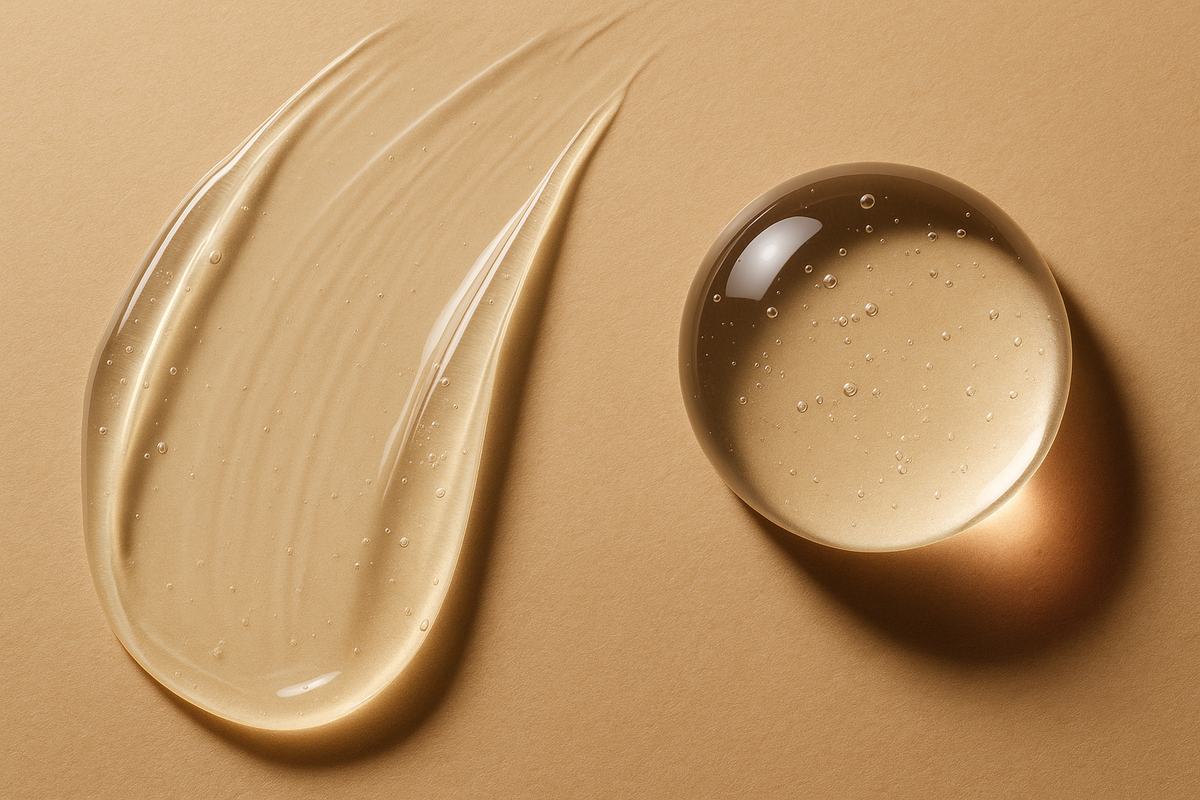
The limit matters more than the mechanism. Hyaluronidase does nothing to a product that is not hyaluronic acid.
| Product | Material | Can it be dissolved? |
|---|---|---|
| Juvederm, Restylane, Belotero, Teosyal | Cross-linked hyaluronic acid | Yes |
| Profhilo | Non cross-linked hyaluronic acid | Yes, though it clears on its own within weeks anyway |
| Radiesse | Calcium hydroxylapatite | No |
| Sculptra | Poly-L-lactic acid | No |
| Polynucleotides | DNA fragments | No, and no dissolving is needed: they are metabolised |
| Permanent fillers such as silicone or PMMA | Synthetic polymer | No. Removal is surgical |
This is the question to ask before you agree to any treatment anywhere: what is the product, and can it be reversed. If the person injecting you cannot answer that in one sentence, that is your answer about the clinic.
One thing people get wrong. Hyaluronidase does not selectively hunt down filler. It breaks down hyaluronic acid, including some of your own, in the volume of tissue it reaches. Your own hyaluronic acid turns over in roughly a day or two and replaces itself, so the effect is temporary, but it is the reason the dose and the placement have to be deliberate rather than generous.
The five reasons people actually come in for it
Patients arriving for dissolving at Chiswick and Covent Garden fall into a small number of groups, and the reason changes the plan more than most people expect.
| Reason | What you notice | How it is approached |
|---|---|---|
| Migration | A shelf above the lip border, a ridge under the eye that was not there at first, filler sitting somewhere it was never placed | Scan first. Dissolve only the displaced portion, leave the rest |
| Overfilling | Flat light on the cheeks, a face that reads heavier in photographs than in the mirror, lips that have lost their shape | Staged. Small dose, review at three weeks, repeat if needed |
| Lumps and nodules | A firm point you can feel, sometimes only under pressure | Targeted. A late inflammatory nodule may need antibiotics rather than enzyme |
| Old filler you forgot about | Nothing obvious, until an ultrasound for something else finds product from six years ago | Usually left alone unless it is distorting something |
| Vascular occlusion | Blanching, disproportionate pain, dusky mottled skin, within hours of treatment | This is an emergency. High dose, immediately, and not something to sleep on |
The last row is the one that changes how you should choose a clinic. Vascular occlusion is rare, but the window in which it is fixable is measured in hours. Any clinic injecting hyaluronic acid should hold hyaluronidase on site and know the protocol without looking it up.
Filler that has drifted is the commonest single complaint we see, and lips are where it shows first. Product placed too superficially, or too much of it, gradually finds the path of least resistance and settles above the vermilion border. It reads as a faint white shelf in a photograph taken with the flash on. Patients often describe it as their lip line disappearing.
Why we scan before we inject
Most filler dissolving in the UK is done by feel. The practitioner palpates the area, forms a view about where the product is, and injects accordingly. It works often enough, and it has an obvious weakness: filler that cannot be felt cannot be aimed at, and tissue that feels firm is not always filler.

Ultrasound changes what the appointment can be. Hyaluronic acid filler appears on a scan as a dark, well defined pocket, and it stays visible for years. Swelling looks different. Scar tissue looks different again. Being able to tell them apart before the needle goes in means three practical things:
- The depth and volume are known, so the enzyme dose is matched to what is there rather than estimated upward for safety.
- Vessels can be identified and avoided, which matters most around the tear trough and the nose.
- Filler placed by someone else, in an area you were not told about, is found rather than guessed at. This happens more often than you would think when a patient has been to several clinics.
Dr Harry James is a GMC-registered doctor with a postgraduate diploma in Clinical Aesthetic Injectable Therapies and sits on the faculty of ACE Group World, the UK group that publishes the complications guidance many injectors work to. The ultrasound is not a gadget bolted onto the service. It is the reason the dose can be small.
Partial dissolving, and why total reset is rarely the goal
People arrive asking to have everything taken out. In most cases that is not what they want once the problem is described accurately.
Take a patient with 2ml in the midface placed over three years, of which perhaps 0.4ml has drifted down towards the nasolabial fold and is now casting a shadow. Dissolving all of it removes support that is doing its job and produces a face that looks suddenly older, which is the outcome that generates the internet horror stories. Dissolving the displaced portion fixes the shadow and leaves the structure alone.
Partial correction is the harder skill and it is the one worth paying for. It also explains why we would rather do two small sessions three weeks apart than one large one. Enzyme cannot be put back.
A position, since nobody else states one. If a clinic offers to dissolve your entire face in one appointment without scanning it and without a review booked, walk. The appeal is that it sounds decisive. The result is that you will spend the following six weeks looking at a face you did not ask for, with no way to reverse the reversal.
What the appointment is like
It is shorter than the consultation that precedes it.
- Consultation and history. What was injected, roughly when, by whom, and whether you have ever had a reaction to a bee sting or to hyaluronidase itself. Bring the record from the original clinic if you have one. Most people do not, which is part of why we scan.
- Ultrasound mapping. Cold gel, a probe, a few minutes. You can see the screen. Patients who have been told for a year that there is nothing there tend to find this the useful part.
- Patch test where indicated. True allergy to hyaluronidase is uncommon but it exists, and the decision to test is made on your history rather than as a routine.
- Injection. Several small deposits into the mapped area. It stings for a few seconds in the way a filler injection does, and lips are the least comfortable site.
- Immediate aftermath. Swelling and firmness for a day or two, occasional bruising. You will look worse before you look better, and the first evening is not the moment to judge the result.
- Review. A follow-up within three weeks is included with treatment at both clinics, and it is where the decision about a second pass gets made.
The timeline, from injection to refilling
| When | What is happening |
|---|---|
| Minutes | The enzyme is already breaking the gel down. Some softening is often noticeable before you leave |
| 24 to 48 hours | The bulk of the visible change. This is the window the treatment is judged on |
| Day 3 to day 7 | Swelling from the injections settles. What you see now is closer to the real result |
| Two to three weeks | Final assessment. If a second session is needed this is when it is planned |
| Four weeks onward | The earliest sensible point to place new filler, and only into tissue that has settled |
The four week wait is not arbitrary caution. Injecting fresh hyaluronic acid into tissue that still contains active enzyme wastes the product, and injecting into tissue that is still swollen means judging volume against a face that is not yet its own shape. Patients who are dissolving before a wedding or a holiday should count backwards from the date and allow six weeks, not two.
What it costs, and the arithmetic of starting again
Ultrasound-guided filler dissolving at Dr Harry Clinic is £500. The consultation is £75, redeemable against the cost of treatment if you go ahead, refunded if you decide not to, and retained only if you cancel inside 24 hours or do not turn up. A follow-up within three weeks is included.
Worth doing the sum properly if you are considering dissolving in order to redo the work elsewhere. Dissolving at £500, then 1ml of filler at £400, is £900 before anything else, and a face that needed 2ml originally will probably need it again. Correcting a modest asymmetry with a small amount of additional product is sometimes the cheaper and better answer, and we will say so if that is what we think.
Risks, and the ones worth taking seriously
Swelling, redness, tenderness and bruising are expected and settle within a week. The three that deserve real attention are less common.
- Allergic reaction. Hyaluronidase is derived from animal or recombinant sources and genuine hypersensitivity does occur. It is the reason your history is taken seriously and the reason a patch test is offered where the history suggests it.
- Over-dissolving. Taking out more than intended, including native hyaluronic acid, leaving an area looking hollow or drawn. It corrects itself over weeks as your own tissue regenerates, but weeks is a long time to look at a face you did not choose. Ultrasound and a conservative dose are how this is avoided.
- Incomplete result. Dense, old, heavily cross-linked product sometimes needs a second session. This is not a failure, it is how the material behaves, and it is why the review appointment exists.
Call the clinic rather than waiting if you develop increasing pain, spreading redness, a rash, or any difficulty breathing after treatment.
When dissolving is the wrong answer
Four situations where we would talk you out of it.
- You are ten days post-treatment and swollen. Filler looks its worst in the first fortnight. A meaningful number of people who book dissolving in week two would have been happy in week six. We will usually ask you to wait and rebook.
- The product is not hyaluronic acid. If what is bothering you is Radiesse or Sculptra, no amount of enzyme will help and anyone offering it is selling you an appointment.
- The complaint is about ageing rather than filler. Hollowing under the eye, a heavy jawline, a flattening midface: these change with time and are frequently blamed on the last treatment. Dissolving them makes it worse. Our eye area guide covers how to tell a hollow from a shadow before you act on it.
- An event is less than a month away. There is no version of this that is predictable enough to do in the week before a wedding.
If you want to understand what your existing filler is likely doing on its own before deciding, our guide to how long dermal fillers last by area is the place to start, and the differences between filler brands explains why two products behave differently in the same face.
Questions we get asked
How long does filler dissolving take to work?
The enzyme starts breaking the gel down within minutes and most of the visible change appears in the first 24 to 48 hours. Injection swelling then settles over three to seven days, so in practice you know at about a week and you confirm it at three.
Does filler dissolving hurt?
It is comparable to having the filler placed. Several small injections, a brief sting, worse in the lips than anywhere else because the tissue is more sensitive. Topical anaesthetic is used where it helps. Most people describe the ultrasound as the easy part and the injections as a couple of uncomfortable minutes.
Is filler dissolving safe?
Hyaluronidase has been in medical use for decades and is the standard emergency treatment for filler-related vascular occlusion. The risks are allergic reaction, over-dissolving and bruising. Safety in practice depends on who is holding the syringe: an assessment that identifies the product and its depth before injecting is the difference between a measured dose and a generous one.
Does hyaluronidase dissolve your own hyaluronic acid or collagen?
It affects your own hyaluronic acid in the area it reaches, which is temporary because your tissue replaces it within a day or two. It does not break down collagen or elastin. The drawn look some people report after aggressive dissolving is loss of the filler plus that short-lived dip in native hyaluronic acid, not permanent damage.
Can migrated lip filler be dissolved without losing all the volume?
Yes, and it is the usual plan. Migrated product above the lip border can be targeted while the filler in the body of the lip is left alone. Ultrasound is what makes the distinction reliable, because migrated filler and normal lip tissue feel similar under the finger.
How much does filler dissolving cost in London?
Ultrasound-guided filler dissolving is £500 at Dr Harry Clinic, with a £75 consultation that is redeemable against the treatment. London prices for dissolving without imaging are generally lower. The difference buys you knowing what is there before it is injected, and a smaller dose as a result.
Can filler be dissolved completely?
Hyaluronic acid filler can be removed effectively, though dense or long-standing product sometimes needs a second session. Complete removal is achievable and is rarely the right goal, because filler that is behaving well is usually doing structural work you will miss.
How soon can I have new filler after dissolving?
Four weeks at the earliest, and we prefer to see the area at three weeks before agreeing to it. Injecting into tissue that still holds active enzyme wastes the product, and injecting into tissue that is still swollen means judging volume against the wrong face.
Can filler from another clinic be dissolved here?
Yes, and it is a large share of what we see. Bring whatever record you have of the product and date. Where there is no record, ultrasound mapping is how the plan gets made rather than guessed at.
What happens in a filler emergency?
Blanching skin, pain out of proportion to the treatment, or a dusky mottled patch in the hours after filler suggests a blood vessel has been compromised. This is treated with high-dose hyaluronidase urgently, not at the next available appointment. Contact the clinic that treated you immediately, and if you cannot reach them, contact any clinic that holds hyaluronidase.
Where to go from here
If something about your filler is bothering you, the first useful step is finding out what is actually there. An assessment with ultrasound answers that in one appointment, and often the answer is that less needs to change than you feared. Dr Harry James sees patients at Chiswick and Covent Garden.
Full treatment detail is on the ultrasound-guided filler dissolving page.
About the author

Aesthetic doctor and clinical director of Dr Harry Clinic, Chiswick and Covent Garden. ACE Group World faculty. GMC 7528423. About Dr Harry
Keep reading
Related articles

Bell’s Palsy After Recovery: Treating Facial Asymmetry and Synkinesis
Botulinum toxin does not cure Bell’s palsy. It treats what it can leave behind: asymmetry between the two sides and synkinesis. What it…
Why Your Face Goes Red: Facial Flushing and Blushing Explained
What is happening in the skin when you flush, which triggers matter, where rosacea differs, and what therapeutic botulinum toxin can and…
Is Profhilo Safe? Side Effects, Risks and What Lowers Them
Profhilo has a strong safety record when it is assessed and given by a trained medical injector. What is normal, what is rare, who should…