
- Home
- Blog
- Dermal Fillers
- Tear Trough Filler: Will It Fix Your Dark Circles or Hollows?
Dermal Fillers · Eye Area · Treatment Guides
Tear Trough Filler: Will It Fix Your Dark Circles or Hollows?
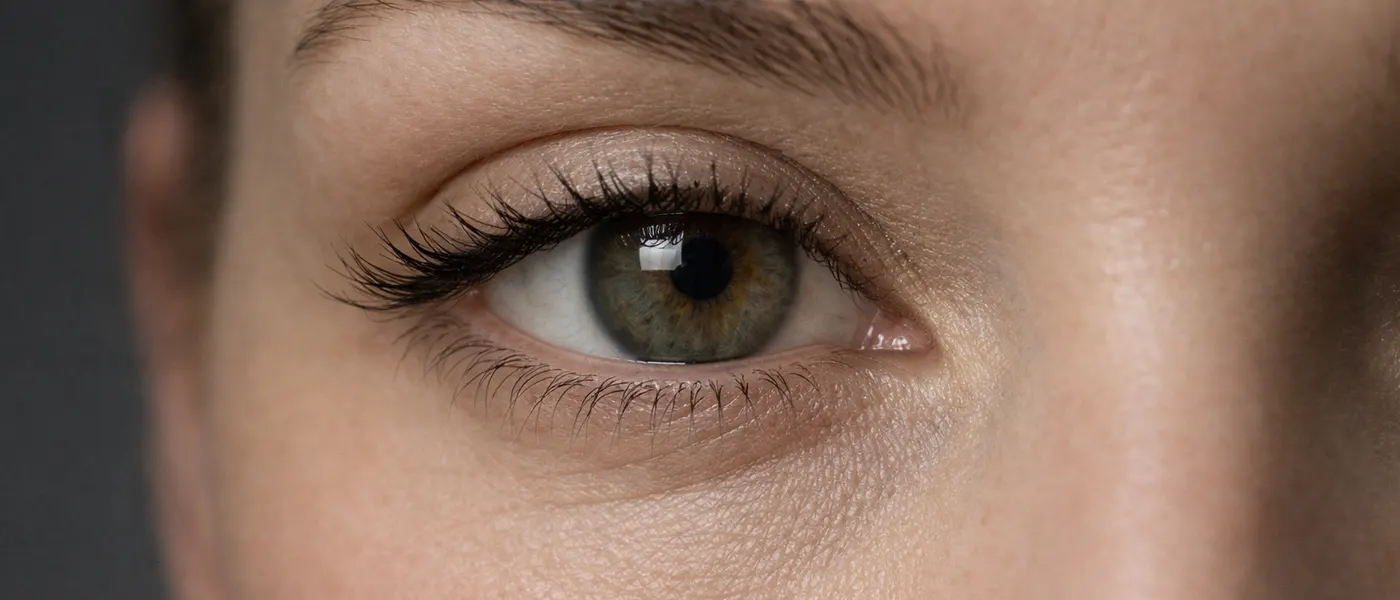
Most people who ask about tear trough filler have already decided that their under-eyes are the problem. The harder question, and the one that decides whether filler will help at all, is why the area looks dark. Hollowing, pigmentation, thin skin over blue vessels and a prolapsed fat pad all produce a similar tired look in a bathroom mirror, and only one of them is reliably improved by putting filler underneath. This guide explains how to tell them apart before you book anything.
Quick answer: Tear trough filler is a hyaluronic acid injection placed deep under the lower eyelid to fill a hollow. At Dr Harry Clinic the product used is Teosyal Redensity 2, results settle over one to two weeks and last around nine to twelve months. It suits shadowing caused by volume loss. It does not treat pigmentation, and it can make a genuine under-eye bag look worse.
In this guide
- What is the tear trough, and what is that area called?
- Why do under-eyes look dark or hollow?
- Are tear troughs genetic?
- Is filler right for me?
- What happens at the appointment
- How long results take, and how long they last
- What it costs
- The risks, and what lowers them
- What to do instead when filler is not the answer
- Questions we are asked most
What is the tear trough, and what is that area called?
The tear trough is the groove that runs from the inner corner of the eye downwards and outwards, marking the boundary between the lower eyelid and the cheek. Clinically the whole region is called the periorbital area, and the hollow itself is the nasojugal groove. You will also hear the eye area, the under-eye, the eye contour and the infraorbital region, and in ordinary use they all point at the same few square centimetres of face.
It matters more than it sounds. The skin here is among the thinnest on the body, there is very little fat between skin and muscle, and the ligament that tethers the lower eyelid to the bone creates a fixed line that deepens as the cheek behind it descends. That is why a shadow appears in your thirties or forties without anything actually changing colour.
Why do under-eyes look dark or hollow?
There are four common causes and they respond to completely different treatments. Working out which one you have, or which combination, is the entire point of a consultation.
| What is actually happening | What helps |
|---|---|
| A true hollow. Volume has been lost under the eye and the cheek has dropped, so light falls into a groove and casts a shadow. | This is the one filler is for. Restoring volume flattens the shadow. |
| Pigmentation. The skin itself is darker, often genetic, often more visible in deeper skin tones. The colour does not change when you lie down. | Skin treatments, sun protection and prescription skincare. Filler will not lighten it and can add a bluish cast. |
| Thin skin over vessels. The bluish tinge is blood showing through skin that has become more translucent with age. | Skin quality treatments such as polynucleotides. Filler placed to hide vessels tends to look puffy. |
| A prolapsed fat pad. The orbital fat has pushed forward, creating a genuine bag that sits proud of the skin. | Filler underneath usually makes the bag more obvious. A surgical opinion is the right route. |
A quick test you can do at home: stand in front of a mirror under an overhead light, then tilt your chin up towards the light. If the darkness largely disappears, you are looking at a shadow cast by a hollow. If it stays exactly as dark, you are looking at pigment.
Are tear troughs genetic?
Often, yes. Plenty of people in their twenties have a visible tear trough with no ageing involved at all, because the shape of the orbital rim and the position of the cheek fat are inherited. Under-eye pigmentation runs in families too, and is more common in people with Mediterranean, South Asian, Middle Eastern and African heritage.
Inherited does not mean untreatable. It does change the conversation, because a hollow you have had since school will not be corrected by fixing your sleep, and no amount of eye cream will fill a groove in bone.
Is filler right for me?
| Filler tends to work well | Filler is usually the wrong choice |
|---|---|
| The darkness is a shadow that lifts when you tilt your face to the light | The colour stays the same in every light, which points to pigment |
| The skin under the eye is reasonably firm and does not crepe when you smile | There is a visible bag that sits forward of the skin surface |
| There is still some cheek support beneath the hollow | The midface has flattened significantly, so the eye area needs support first |
| You want a subtle change and can accept partial correction | You are hoping for a complete transformation of tired-looking eyes |
| You are in good general health with no active infection near the eye | You are pregnant, breastfeeding, or have a history of significant under-eye swelling |
Being told no is a reasonable outcome of a consultation. A proportion of people who come in asking for tear trough filler leave with a plan for cheek support, skin quality work, or nothing at all, and that is a better result than an under-eye that looks heavier than it did before.
What happens at the appointment
Assessment comes first and it deliberately includes the midface. Tear trough hollowing is frequently a cheek problem showing up one level higher, so Dr Harry looks at how much support sits beneath the hollow before deciding whether to treat the hollow itself. Skin quality, pigmentation, fat pad position and the depth of the groove are all examined in normal light and with the face at rest and animated.
The product used is Teosyal Redensity 2, a filler formulated specifically for the under-eye. It is placed deep, close to the bone, rather than superficially in the skin, which is what keeps it from showing as a ridge or reflecting light with a bluish tint. Volumes are small, and it is normal to place noticeably less than a patient expects.
Treatment itself takes around thirty minutes. Bruising is the most common side effect here, more so than anywhere else on the face, because the area is rich in small vessels. Plan around anything important in your diary for the fortnight afterwards.
How long results take, and how long they last
Results become visible within one to two weeks, once the initial swelling has settled and the product has integrated. Judging the outcome on day two is the most common mistake patients make, and it is usually the day people worry.
Correction typically lasts nine to twelve months. The under-eye is a low-movement area, so filler here often outlasts filler placed in the lips or the jawline. Some patients come back annually. Others find the result softens gradually and choose not to repeat it.
What it costs
A consultation and assessment is £75, and that fee is protected against the cost of treatment. Filler is priced by volume rather than by area, so the tear trough is charged according to how much product is actually used, which for this region is a small amount.
| Item | Price |
|---|---|
| Consultation and assessment | £75, protected against treatment |
| Dermal filler, 0.6 ml | £275 |
| Dermal filler, 1 ml | £400 |
| Polynucleotides, single session | £350 |
| Polynucleotides, course of three | £900 |
| Filler dissolving | £500 |
The full list is on the prices page. Be wary of a tear trough quoted at a price far below this in London. The product is expensive, the area is unforgiving, and the saving usually comes out of somewhere.
The risks, and what lowers them
Bruising and swelling are common and settle. Longer-lasting puffiness happens when product is placed too superficially or too generously, and it can persist for months. The Tyndall effect, a bluish-grey discolouration caused by light scattering off filler sitting too close to the surface, is the complication patients read about most. The rare and serious risk, as anywhere on the face, is filler entering a blood vessel, which in this region carries a risk to vision.
What lowers these risks is not a brand of filler. It is anatomical knowledge, conservative volumes, correct depth, and a practitioner who can manage a complication if one occurs. Dr Harry James is GMC registered and sits on the faculty of ACE Group World, the complications group that trains other injectors in exactly this. Dissolving is available if a result is not what you wanted, and ultrasound-guided work is offered for cases that need it.
What to do instead when filler is not the answer
If the problem is skin quality or thin, crepey skin showing vessels beneath, polynucleotides target the tissue itself rather than adding volume, and are frequently the better choice under the eye. If the hollow is really a flattened midface, cheek treatment restores the support that the under-eye sits on, and the shadow often improves without anything being placed under the eye at all.
If fine lines at the outer corner are the real concern rather than the hollow, that is crow’s feet territory and a different treatment entirely. And if there is a true fat pad prolapse, the correct advice is a surgical opinion, not an injection.
Questions we are asked most
Does tear trough filler hurt?
Most patients describe pressure rather than pain. Topical numbing is used and the filler contains lidocaine. The area is sensitive, so it is not comfortable, but it is brief.
How long will I be bruised?
Bruising is more likely here than in most areas and typically fades over five to ten days. Avoid alcohol, aspirin and fish oil supplements in the days before treatment if it is safe for you to do so, and do not book anything significant for a fortnight.
Will filler get rid of my dark circles?
Only if the darkness is a shadow cast by a hollow. If the skin itself is pigmented, filler will not lighten it, and adding volume can slightly deepen the colour by putting a translucent gel under thin skin.
Can tear trough filler be reversed?
Yes. Hyaluronic acid filler can be dissolved with hyaluronidase. Dissolving is £500 and is the usual route if a result is too full or has caused persistent puffiness.
How long does it last?
Around nine to twelve months for most people. The under-eye moves relatively little, which tends to make results here more durable than filler in more mobile areas.
I am in my twenties. Am I too young?
Age is not the deciding factor. A genetically inherited hollow at twenty five is a reasonable thing to treat, whereas a pigmented under-eye at fifty is not, whatever the birth date says.
Which clinic is this treated at?
Both. Dr Harry Clinic treats tear troughs at the Chiswick clinic and at Covent Garden.
If you want the clinical detail behind all of this, the eye area anatomy guide covers the structures involved in depth, and the tear trough anatomy article goes further into assessment and injection technique. To read about the treatment itself, see the tear trough filler page or the wider eyes and tear troughs section.
About the author
Aesthetic doctor and clinical director of Dr Harry Clinic, Chiswick and Covent Garden. ACE Group World faculty. GMC 7528423. About Dr Harry
Keep reading
Related articles

Bell’s Palsy After Recovery: Treating Facial Asymmetry and Synkinesis
Botulinum toxin does not cure Bell’s palsy. It treats what it can leave behind: asymmetry between the two sides and synkinesis. What it…
Why Your Face Goes Red: Facial Flushing and Blushing Explained
What is happening in the skin when you flush, which triggers matter, where rosacea differs, and what therapeutic botulinum toxin can and…
Is Profhilo Safe? Side Effects, Risks and What Lowers Them
Profhilo has a strong safety record when it is assessed and given by a trained medical injector. What is normal, what is rare, who should…