
- Home
- Blog
- Dermal Fillers
- Chin Filler: How Chin Projection Changes Your Whole Profile
Dermal Fillers · Lower Face & Jawline
Chin Filler: How Chin Projection Changes Your Whole Profile
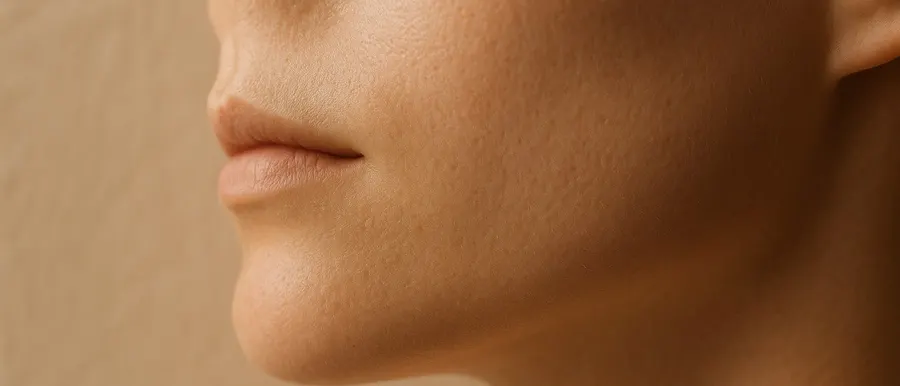

Chin Filler and the Side Profile
What chin projection actually changes, who it suits, and what to expect.
Most people who ask about chin filler are not really asking about their chin. They are asking why their side profile looks softer than they expect, why their jawline seems to fade into the neck in photographs, or why their lower face reads as slightly out of proportion even though every individual feature looks fine. At Dr Harry Clinic, an aesthetic clinic in Chiswick and Covent Garden, London, chin enhancement is one of the small structural treatments that changes how the whole lower face is read. This guide, from GMC registered aesthetic doctor and aesthetic medicine trainer Dr Harry James, explains what it does, who it suits, what it costs and what recovery is really like.
Quick answer: chin filler is a non surgical treatment that uses hyaluronic acid dermal filler to add projection, length or width to the chin, improving side profile balance and the transition between the chin, jawline and neck. Most chins need 1ml to 2ml, results are visible immediately, swelling settles within a few days, and the effect typically lasts 12 to 18 months.
In this guide:
What chin filler actually does
Chin filler adds structure to the bony platform of the lower face. A hyaluronic acid gel is placed in small, controlled amounts against or just above the chin bone, and it does three separate jobs depending on what your face needs.
- Projection. Bringing the chin forward so it sits in better relation to the lips and nose when viewed from the side. This is the change most people notice first.
- Length. Adding a small amount of vertical height to a lower face that reads as short or compressed.
- Shape and width. Softening a chin that dimples or looks uneven, or squaring a chin very slightly to continue the line of the jaw.
Because the chin is a structural area rather than a soft tissue one, the products used are firmer and more supportive than the gels used in lips. Our guide to the different types of dermal filler explains why product choice matters so much in this part of the face.
Why a small chin changes the whole profile

The chin is the front support of the lower third of the face. When it sits slightly behind where the eye expects it, several things happen at once and none of them are actually chin problems.
- The lips can appear to protrude, even when they are a normal size.
- The nose can look larger in profile, because there is less structure below it for balance.
- The jawline loses its endpoint, so the line from ear to chin softens and blurs into the neck.
- The area under the chin can look fuller than it is, because there is less projection to define the edge above it.
This is why chin treatment is so often the quiet answer to a complaint about something else. Someone who arrives asking about their nose or their neck may find that a millilitre at the chin does more for the profile than treating the feature they were worried about. The anatomy behind this is covered in more depth in our guide to lower face anatomy, jawline definition and ageing.
A useful test at home. Take a photograph of yourself from the side, in even light, looking straight ahead. Ignore the front facing selfie you normally judge yourself on. Almost everyone who is a good candidate for chin filler can see the imbalance immediately in profile and has never noticed it head on.
Who chin filler suits, and who it does not
Chin enhancement works best when the underlying structure is the limiting factor and the skin and soft tissue are still supportive. It suits people who recognise themselves in the following.
- A chin that sits behind the lower lip in profile, sometimes described as recessed or under projected.
- A jawline that has been treated or is being considered for treatment, where the chin is the missing endpoint.
- A lower face that looks short, rounded or slightly asymmetric.
- Men who want more structure at the front of the jaw. Chin and jaw work is a large part of our male dermal filler practice, and the shaping goals differ from those used for women.
- Anyone whose orthodontic or jaw surgery is complete and who wants to refine the final proportion without further surgery.
It is a poor choice, or at least the wrong first step, in a few situations. Significant skeletal discrepancy, where the bite itself is the problem, belongs with a maxillofacial or orthodontic opinion rather than with filler. Marked skin laxity or heavy jowling is not corrected by adding projection, and is better addressed on its own terms, as explained in our article on marionette lines and lower face ageing. Active infection in the area, pregnancy and breastfeeding are all reasons to postpone. If you are unsure which category you fall into, that is exactly what an assessment is for.
How much filler does a chin need, and what does it cost?
Most chins are treated with 1ml to 2ml. A subtle projection correction can be achieved with 1ml. A chin that needs both forward projection and vertical length, or that is being built to match a treated jawline, usually needs 2ml or more, and is sometimes best staged across two appointments so the result can be assessed once swelling has settled.
| What you want to change | Typical volume | Price on our list |
|---|---|---|
| Subtle projection, profile only | 1ml | £400 |
| Projection plus a little length or width | 2ml | £550 |
| Chin and jawline treated together | 3ml or more | from £700 |
Those figures come from our published price list and cover the filler itself. Your assessment establishes what is actually needed before anything is agreed, and staging over two visits does not mean paying twice for the same millilitre.
What the appointment involves
A chin appointment at either clinic follows the same shape. Allow around 45 minutes for a first visit, of which the injecting itself is a small part.
- Assessment in profile and head on. Dr Harry looks at the relationship between chin, lips, nose and jawline rather than at the chin in isolation, and photographs are taken for comparison later.
- A plan you agree before anything is opened. Volume, product and the expected change are discussed, along with whether the chin alone or the chin and jaw together will get you where you want to be.
- Numbing. Topical anaesthetic is applied, and the products used contain local anaesthetic as well. Most people describe pressure rather than pain.
- Placement. Filler is delivered in small aliquots, usually deep against the bone, with a needle or a cannula depending on the plan.
- Review in the mirror, then aftercare. You see the immediate change, and you leave with written aftercare and clear emergency contact details.
Recovery, day by day
Chin filler is one of the more comfortable filler treatments to recover from, largely because the area moves less than the lips and is not as vascular as the midface.
- Day of treatment. Mild swelling and tenderness. Injection points may be slightly red for a few hours. Most people go straight back to work.
- Days 1 to 3. Any swelling peaks and settles. Occasional bruising at an entry point, easily covered.
- Week 1. The chin can feel firm to the touch. That is the product doing its job, not a lump.
- Weeks 2 to 4. The filler integrates and softens into its final shape. This is the point to judge the result and to book a review if you want a refinement.
The general rules for the first 48 hours are the same as for any filler, and are set out in full in our dermal filler aftercare guide. In short: leave the area alone, skip strenuous exercise, alcohol and extreme heat, and sleep slightly elevated on the first night.
Chin filler compared with the alternatives
| Option | What it changes | Downtime | How long it lasts |
|---|---|---|---|
| Chin filler | Projection, length, shape of the chin itself | Little to none | 12 to 18 months |
| Jawline filler | The angle and border of the jaw, not the front | Little to none | 12 to 18 months |
| Masseter treatment | Narrows a wide lower face by relaxing the chewing muscle | None | Around 3 to 6 months |
| Anti wrinkle injection to the chin | Softens dimpling or an orange peel texture, adds no volume | None | Around 3 to 4 months |
| Genioplasty (surgery) | Moves the bone itself, for large discrepancies | Weeks | Permanent |
These are not competing choices so much as different tools. A wide, square lower face that the patient wants softened is a masseter question. A jaw that fades at the back is a jawline filler question. A chin that stops short in profile is a filler question at the chin. Many people benefit from a combination, planned across the whole jawline and chin area rather than one area at a time. If you are weighing muscle relaxing treatment against volume, our comparison of anti wrinkle injections and fillers is a useful next read.
Risks, and how they are managed
Common effects are minor and short lived: swelling, tenderness, small bruises, and a firm feeling for a week or so. Asymmetry that is still visible at the two week review can usually be refined with a very small top up.
The serious risk with any dermal filler is vascular, where product affects a blood vessel. It is rare, and it is the reason technique, anatomical knowledge and having a plan for complications matter more than the brand of filler used. Dr Harry James is a faculty member of ACE Group World, the UK body focused on managing aesthetic complications, and every patient leaves with emergency contact details and instructions on what to look for. Hyaluronic acid filler is also reversible, and ultrasound guided filler dissolving is available if a result ever needs to be undone or corrected.
Contact us straight away if you notice severe or increasing pain, skin that turns white, dusky or mottled, blistering, or any change in vision after treatment. These are rare, and they are treatable when acted on quickly.
Chin filler in Chiswick and Covent Garden

Chin enhancement is carried out at both of our London clinics, in Chiswick and in Covent Garden, by Dr Harry James. If you are not sure whether the chin is the right place to start, come for an assessment and leave with a plan rather than a treatment. Plenty of people are told that a different area, or nothing at all, will serve them better.
Frequently asked questions
Does chin filler hurt?
Most people describe pressure rather than pain. Topical numbing is applied first and the fillers used contain local anaesthetic, so the chin is largely numb by the time placement begins. It is generally reported as more comfortable than lip treatment.
How long does chin filler last?
Typically 12 to 18 months. The chin holds filler well because the area moves relatively little compared with the lips or the perioral region. Our guide to how long dermal fillers last by treatment area sets out the differences.
Will chin filler make my face look bigger?
Correctly placed, it usually does the opposite. Adding projection at the front gives the jawline a clear endpoint, which tends to make the lower face read as more defined and slightly slimmer in profile rather than fuller. Over filling is what creates a heavy look, which is why volume is planned rather than assumed.
Can chin filler help a double chin?
It can improve the appearance of the area in some cases, by sharpening the border between the chin and the neck, but it does not remove fat beneath the chin. If submental fullness is the main concern, that needs assessing on its own before deciding whether projection would help at all.
Can chin filler be dissolved if I do not like it?
Yes. Hyaluronic acid filler can be dissolved with hyaluronidase, and we offer ultrasound guided dissolving so the product can be located precisely before treatment. It is rarely needed for chin work, but the option exists.
Should I treat the chin or the jawline first?
If the profile is your main concern, start with the chin. If the concern is definition along the sides of the face and the angle below the ear, start with the jawline. When both are involved, treating them in one plan gives a more coherent result than treating one area and reassessing months later.
Is there an age at which chin filler stops being appropriate?
No fixed age, but the reasoning changes. In younger patients chin filler is usually about proportion. From the forties onwards, bone resorption at the chin and jaw contributes to the change, so the same treatment is often restoring structure that used to be there rather than adding something new.
Wondering whether your chin is the missing piece?
Book an assessment in Chiswick or Covent Garden and get a plan for your profile, not a sales pitch.
About the author

Aesthetic doctor and clinical director of Dr Harry Clinic, Chiswick and Covent Garden. ACE Group World faculty. GMC 7528423. About Dr Harry
Keep reading
Related articles

Dermal Filler Aftercare: The First 48 Hours and Beyond
Dermal filler aftercare from Dr Harry Clinic: what to avoid in the first 48 hours, what swelling is normal, the red flags that need a call,…

Filler Dissolving: How It Works, What It Costs and When Not To
Filler can be taken out. That single fact is the reason hyaluronic acid became the material the whole industry standardised on, and it is…

Anti-Wrinkle vs. Fillers: Which Treatment is Right for Your Concerns?
Navigating the world of aesthetic treatments can be complex, especially when faced with popular and effective options like anti-wrinkle…