
- Home
- Blog
- Lower Face & Jawline
- Marionette Lines: Why the Corners of Your Mouth Turn Down
Lower Face & Jawline · Dermal Fillers · Treatment Guides
Marionette Lines: Why the Corners of Your Mouth Turn Down
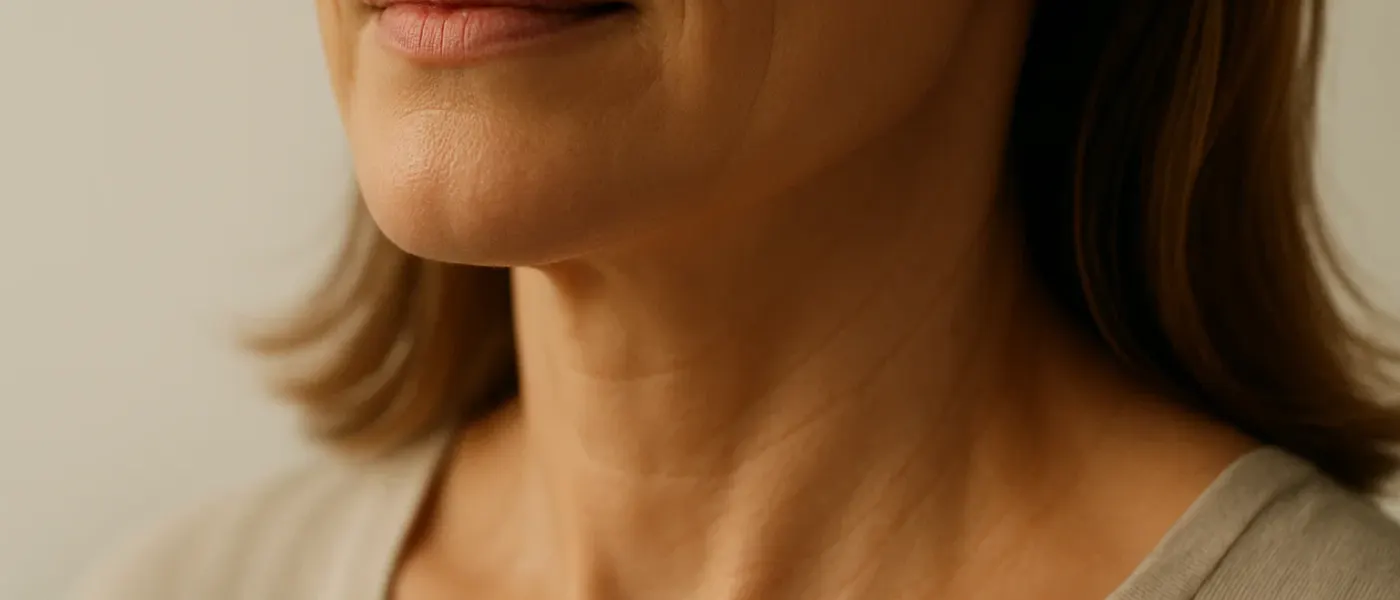

Marionette Lines
Why the lines from your mouth corners deepen, and what genuinely changes them.
Marionette lines run downwards from the corners of the mouth towards the jawline, and they are named after the hinged mouth of a puppet. They are the reason a face at rest can look disappointed when the person behind it is not. At Dr Harry Clinic, an aesthetic medicine clinic in Chiswick and Covent Garden, London, they are assessed as a lower face problem rather than a line problem, because filling the crease without addressing what pulled it there is how faces end up looking heavy.
This guide covers the anatomy that produces them, why they can appear in your thirties, what makes some faces prone to them, and how the realistic treatment options compare, including where the answer is not filler.
Quick answer: Marionette lines form where four things meet: a muscle called the depressor anguli oris that pulls the mouth corner down, loss of fat and bone support in the lower face, ligaments that stretch and let tissue descend, and skin that has lost the collagen it needs to spring back. Treatment is chosen by which of the four is doing most of the work in your face. Dermal filler restores support beneath the corner, small doses of botulinum toxin relax the downward pull, and skin quality treatments address the crease itself. Results from filler are immediate and typically last 9 to 18 months.
In this guide:
- The four layers that make a marionette line
- The muscle that pulls your mouth corner down
- Why some people get them in their thirties
- Marionette lines are not nasolabial folds
- The treatment options compared
- What filler in this area actually involves
- Five ways lower face treatment goes wrong
- What slows them down
- Frequently asked questions
The four layers that make a marionette line
A line in the skin is the last thing to happen, not the first. By the time a crease is etched from the mouth corner to the jaw, changes have already happened in three layers underneath it. This is why creams aimed at the surface disappoint people and why treatment planning starts deeper.
| Layer | What changes | What it does to the mouth corner |
|---|---|---|
| Bone | The jaw and chin lose height and projection over decades, and the tooth bearing bone recedes | The scaffold under the lower face shrinks, so the soft tissue above it has less to sit on |
| Fat | Deep fat pads in the lower cheek and around the chin lose volume, while more superficial fat drifts downward | A hollow forms above the jawline and a fullness collects below it, and the line sits in the step between them |
| Ligaments | The retaining ligaments that anchor skin to the deeper structure stretch | Tissue is allowed to descend past its old position, deepening the crease at the fixed point |
| Muscle | The depressor anguli oris stays active, often becoming relatively stronger as other support fades | The corner is pulled down thousands of times a day, and the skin eventually keeps the fold |
| Skin | Collagen and elastin decline, accelerated by sun exposure and smoking | The crease stops springing back after each expression and becomes permanent |
Those five rows are the reason two people with identical looking lines can need completely different treatment.
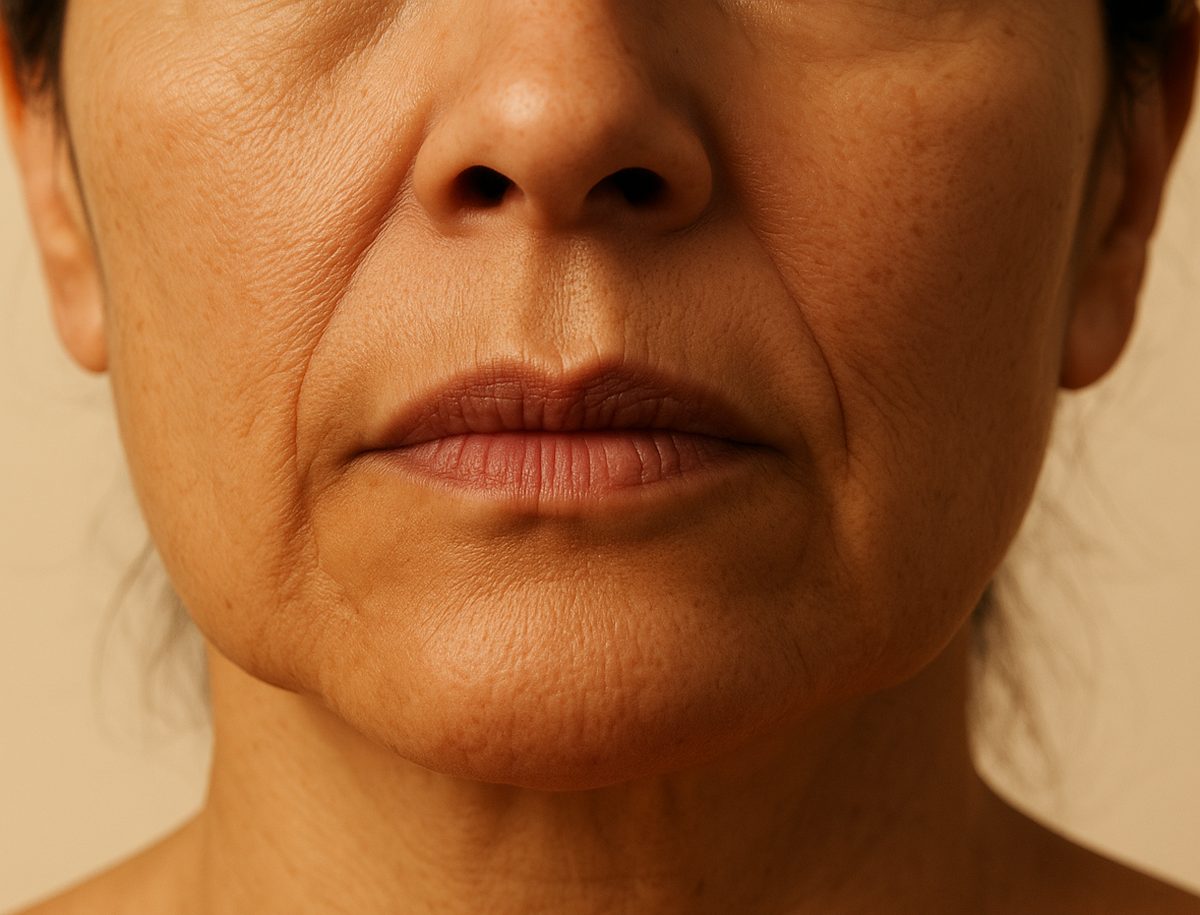
The muscle that pulls your mouth corner down
The depressor anguli oris, usually shortened to DAO, is a small triangular muscle running from the jaw up to the corner of the mouth. Its job is to pull that corner down, which is the expression you make when you are unimpressed. Everyone has one and everyone uses it.
The problem is that the muscles which lift the corner weaken with age faster than the DAO does. The tug of war stops being even. The corner sits a little lower at rest each year, and the skin at the crease is folded over and over until it holds the fold on its own.
Where the DAO is the dominant factor, a very small dose of botulinum toxin placed into the muscle reduces the downward pull and lets the corner sit higher. Our downturned mouth treatment is exactly this, and it is a good example of a case where filler alone would have been the wrong answer. Dose matters more here than almost anywhere on the face, because the muscles around the mouth are involved in speaking and eating.
Why some people get them in their thirties
Marionette lines are not purely an age marker, which surprises people who develop them early. Several things bring them forward.
- Facial structure. A slimmer face with less native fat, or a smaller chin with limited projection, gives the lower face less to rest on from the start.
- Strong depressor activity. Some people simply have a more active DAO, often visible as a downturned mouth in photographs from their twenties.
- Significant weight loss. Fat loss in the face is not selective, and the lower face is where it shows first. This is increasingly common and worth raising at consultation.
- Sun exposure and smoking. Both degrade collagen, and smoking adds a repeated pursing movement on top.
- Dental change. Tooth loss or a change in bite alters the support the lower face is built on, and the effect on the mouth corners can be marked.
Marionette lines are not nasolabial folds
These two get conflated constantly, including by people booking treatment for the wrong one. Nasolabial folds run from the sides of the nose down to the corners of the mouth. Marionette lines pick up where those end and continue towards the jaw. They often appear together because they share causes, but they respond differently.
| Nasolabial folds | Marionette lines | |
|---|---|---|
| Where they run | Nose to mouth corner | Mouth corner towards the jawline |
| Main driver | Midface volume descending onto a fixed ligament | Downward muscle pull plus loss of lower face and jawline support |
| Usual first move | Support the cheek above the fold rather than injecting the fold | Restore support beneath the corner, and relax the depressor where it is dominant |
| What it does to the face | Adds years and can read as tiredness | Changes perceived mood, which is why people describe looking cross |
If your concern is the upper half of that pair, our detailed guide to what causes nasolabial folds covers the anatomy and the same layer by layer logic applied to the midface.
The treatment options compared
There is no single treatment for marionette lines, and any clinic offering one without an assessment is selling a product rather than solving a problem.
| Approach | What it addresses | Realistic expectation |
|---|---|---|
| Dermal filler beneath the corner and along the jaw | Lost volume and structural support | Immediate softening and a subtle lift of the corner, typically 9 to 18 months depending on product and metabolism |
| Botulinum toxin to the depressor anguli oris | Active downward pull on the mouth corner | Corner sits higher at rest. Repeated roughly every three to four months |
| Cheek or jawline support | The descent above and behind the line | Often changes the line more than injecting the line itself does |
| Chin enhancement | A short or receding chin that leaves the lower face unsupported | Improves the proportion the lines sit within, addressed in our chin filler guide |
| Skin quality treatments | Collagen and skin resilience at the crease | Gradual improvement in texture and fine etching, not a fix for a deep fold |
| Surgery | Substantial tissue descent and skin laxity | The right answer where jowling is advanced, and beyond what injectables can achieve |
Our position, and it is a position rather than a neutral summary, is that most disappointing marionette line results come from treating the line as a groove to be filled. The cases that look natural are the ones where the cheek, jawline and chin were assessed first, and the crease was the last thing touched.
What filler in this area actually involves
The lower face has a rich blood supply, so technique here is a safety question as much as an aesthetic one. Dr Harry uses a cannula in this region rather than a needle wherever appropriate, which reduces bruising and lowers the risk associated with the vessels running through it.
Product choice follows the same logic. Flexible hyaluronic acid fillers such as Belotero Balance and Belotero Volume are used here because the area moves constantly. A firm product placed into a mobile region is what produces the stiff, shelved look people are frightened of. Depth is layered: deeper placement where structural support has gone, more superficial refinement only where it is needed.
Expect light swelling or bruising for 24 to 48 hours, results that settle over several days rather than looking final immediately, and a review to check symmetry. Because it is a hyaluronic acid product, it can be dissolved if the result is not what you wanted, which is a genuine safety advantage over permanent products and worth knowing before you commit.
Five ways lower face treatment goes wrong
- Filling the groove and nothing else. The line softens and the face gains weight low down, which reads as heaviness rather than youth.
- Too much product in one visit. The lower face tolerates less than people expect. Building over two sessions beats correcting an overfilled result.
- Over relaxing the depressor. Too high a dose can affect the smile and speech. This is a small muscle in a busy neighbourhood.
- Ignoring the jawline. If tissue is collecting below the jaw, treating the crease above it leaves the underlying change untouched.
- Treating a surgical problem with injectables. Where descent is advanced, adding volume makes it heavier. Saying so is part of the job.
What slows them down
Nothing prevents marionette lines, and any claim otherwise should be treated with suspicion. Several things reliably slow them.
- Daily broad spectrum SPF, which does more for the lower face over twenty years than any product marketed at the lines themselves.
- Not smoking, which affects both the collagen and the repeated pursing movement.
- Avoiding repeated cycles of significant weight loss and regain.
- Keeping up with dental care, since the bone and the bite underneath change the support the whole lower face is built on.
- Treating earlier and lighter rather than waiting for a deep crease, because supporting a structure is easier than rebuilding one.
For the wider picture of how the lower third of the face changes, our guide to lower face anatomy and jawline ageing takes the same layer by layer approach across the jaw, and the chin filler guide covers projection and profile in detail.
Have your lower face assessed properly
Chiswick and Covent Garden. If injectables are not the right answer for your face, we will tell you.
Frequently asked questions
What causes marionette lines?
They come from four things acting together: the depressor anguli oris muscle pulling the mouth corner down, loss of fat and bone support in the lower face, retaining ligaments stretching so tissue descends, and skin losing the collagen it needs to spring back after each expression. Sun exposure, smoking, significant weight loss and facial structure all bring them forward.
Can you get rid of marionette lines without surgery?
Moderate lines can usually be softened substantially without surgery, using a combination of support beneath the mouth corner, treatment of the downward muscle pull where it is dominant, and attention to the cheek and jawline above. Deep lines with advanced tissue descent and jowling are a different situation, and injectables can make those look heavier rather than better. That assessment is the point of the consultation.
How long does filler for marionette lines last?
Typically 9 to 18 months, depending on the product used, your skin quality and your individual metabolism. Because the area moves constantly, it tends to sit at the shorter end of that range for people who are very expressive. Maintenance treatments often need less product than the first, since some support is already in place.
Why do I have marionette lines in my thirties?
Age is only one factor. A slimmer face, a smaller chin, a naturally strong depressor muscle, significant weight loss, smoking and sun exposure can all produce them early. Lines appearing young are usually a structural or muscular pattern rather than premature ageing, and they often respond well because the tissue quality is still good.
What is the difference between marionette lines and nasolabial folds?
Nasolabial folds run from the sides of the nose to the corners of the mouth. Marionette lines start at the mouth corners and run down towards the jawline. They frequently occur together, but nasolabial folds are driven mainly by midface descent while marionette lines are driven by downward muscle pull and loss of lower face support, so the treatment plan differs.
Will filler make my face look puffy?
Not when the plan restores support rather than filling the crease. Puffy results come from injecting volume into the line itself without addressing the cheek and jawline above it, or from using too firm a product in a mobile area. Flexible hyaluronic acid products placed at the right depth, with a conservative amount at the first session, is what keeps the result looking like your face.
Can anti-wrinkle injections treat marionette lines?
They treat one component of them. A small dose into the depressor anguli oris reduces the downward pull on the mouth corner, which lifts the corner at rest and softens the fold over time. It does not replace lost volume, so where the main problem is structural it is used alongside filler rather than instead of it. Dose is critical here because of the surrounding muscles used for speaking.
Does treating marionette lines lift downturned mouth corners?
Yes, that is usually one of the goals. The two problems share their causes, so restoring support under the corner and reducing the depressor pull tends to improve both together. The change most people notice is not the line disappearing but the resting expression looking less severe.
Is there any downtime?
Expect light swelling or bruising for around 24 to 48 hours after filler in this area. A cannula technique reduces bruising compared with a needle. The result settles over several days, so judge it at the review rather than in the mirror that evening.
Can marionette line filler be reversed?
Yes. Hyaluronic acid fillers can be dissolved with hyaluronidase if the result is not what you wanted or if a correction is needed. That reversibility is one of the practical reasons hyaluronic acid is used in a mobile area like this rather than a permanent product.
This article is general information and is not a substitute for a personal medical consultation. Suitability, risks and alternatives are assessed individually. To arrange an assessment with Dr Harry James, book at our Chiswick or Covent Garden clinic via the appointment page. Marionette line treatment options are described on our marionette lines treatment page.
About the author

Aesthetic doctor and clinical director of Dr Harry Clinic, Chiswick and Covent Garden. ACE Group World faculty. GMC 7528423. About Dr Harry
Keep reading
Related articles

Bell’s Palsy After Recovery: Treating Facial Asymmetry and Synkinesis
Botulinum toxin does not cure Bell’s palsy. It treats what it can leave behind: asymmetry between the two sides and synkinesis. What it…
Why Your Face Goes Red: Facial Flushing and Blushing Explained
What is happening in the skin when you flush, which triggers matter, where rosacea differs, and what therapeutic botulinum toxin can and…

Is Profhilo Safe? Side Effects, Risks and What Lowers Them
Profhilo has a strong safety record when it is assessed and given by a trained medical injector. What is normal, what is rare, who should…