
- Home
- Blog
- Lips & Perioral
- Lip Anatomy & Ageing: Understanding the Perioral Region
Lip Anatomy & Ageing: Understanding the Perioral Region
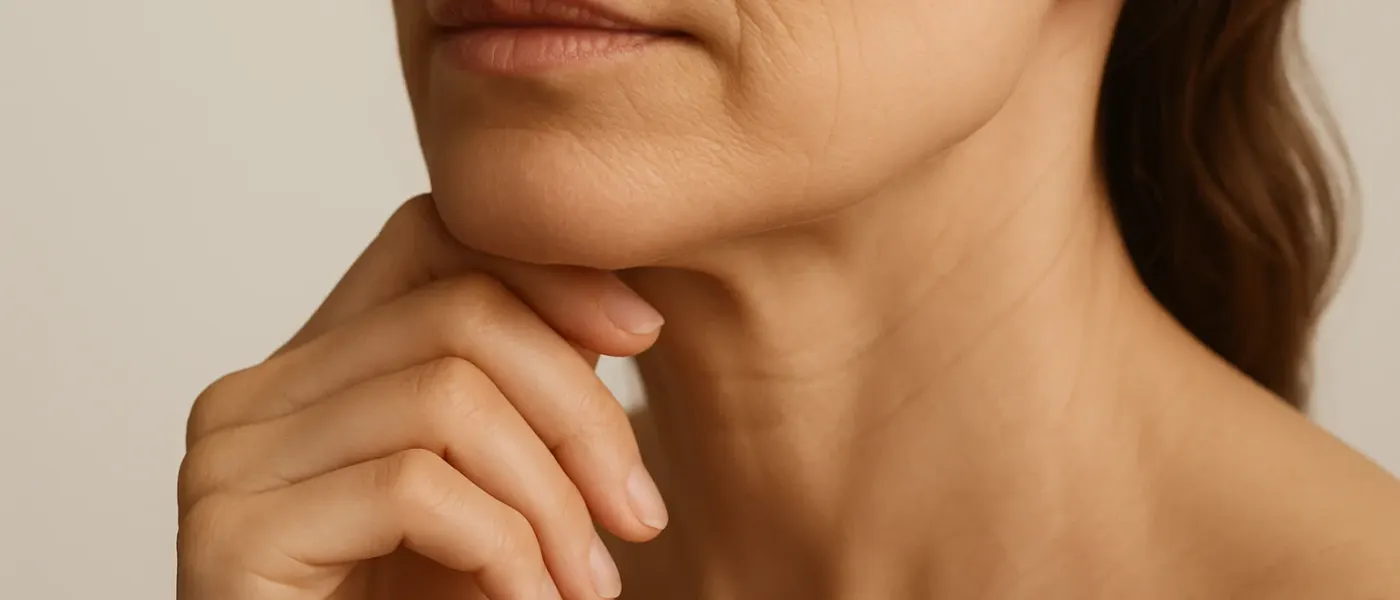
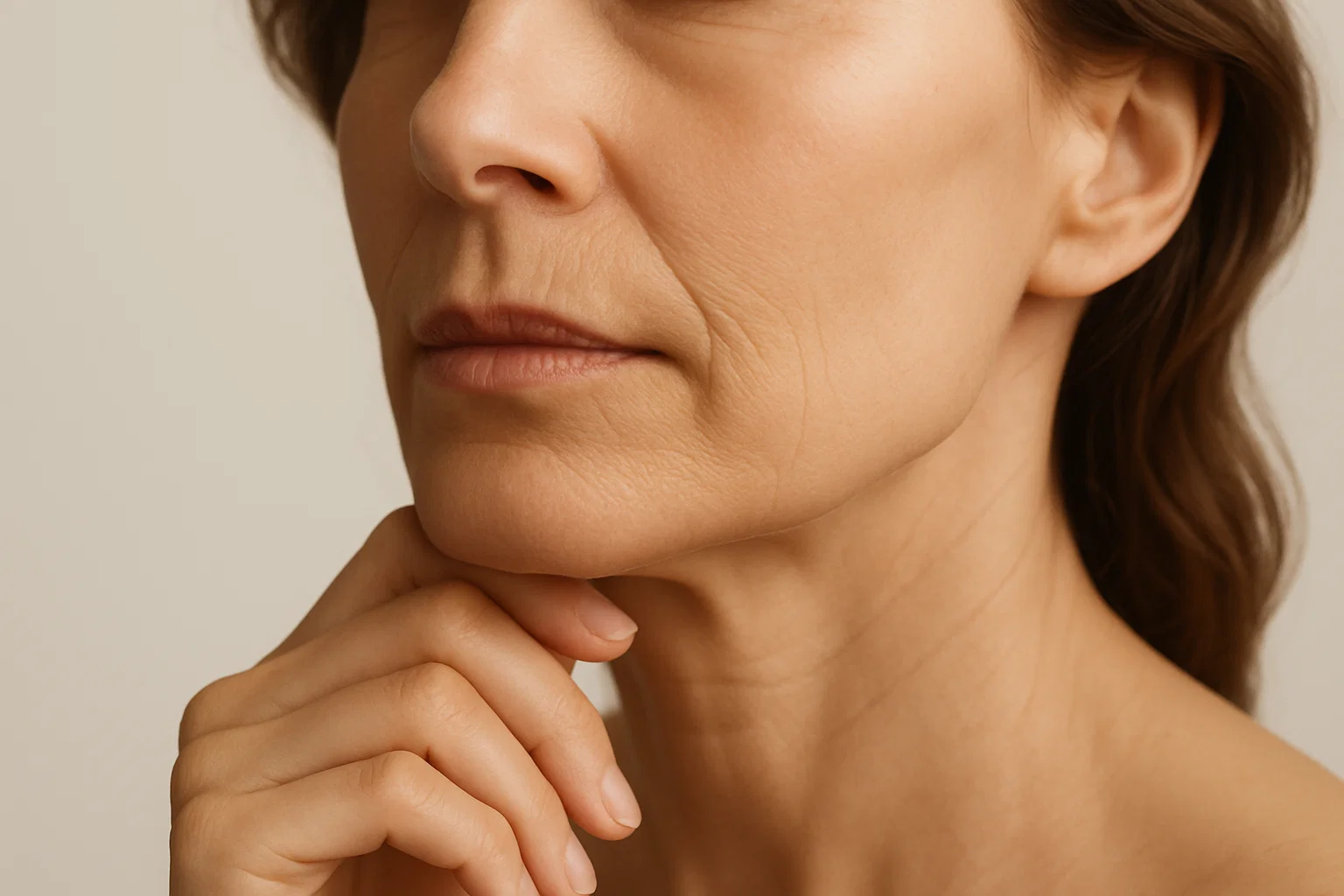
Lip Anatomy and Ageing
What changes in the perioral region, in what order, and which treatment answers which change.
Most people who come to Dr Harry Clinic, a medical aesthetic clinic in Chiswick and Covent Garden, London, asking about their lips do not want bigger lips. They want the lips they had at thirty. Those are different requests and they need different treatments, and telling them apart depends on knowing which part of the perioral anatomy has actually changed. This guide, from GMC-registered aesthetic doctor Dr Harry James, walks through the region as we assess it in clinic.
Quick answer: lips age in four ways at once. They lose hyaluronic acid and therefore volume, the vermillion border and white roll blur so the edge softens, the skin between nose and lip lengthens so the red part rolls inward and looks thinner, and the corners turn down as the depressor anguli oris muscle wins against the muscles lifting them. Filler answers the first. It cannot fix the other three on its own.
In this guide:
- The landmarks that make a lip read as young
- The muscles, and the tug of war at the corners
- Where the arteries run, and why that matters to you
- How lips age, in the order it happens
- Why the upper lip gets longer
- Perioral lines in people who have never smoked
- The treatments compared, with prices
- Who we treat, and who we turn down
- FAQs
What makes a lip read as young?
Very little of it is size. A youthful mouth is mostly about edges and light. Six structures do that work, and when a treatment goes wrong it is usually because one of them was ignored.
| Structure | What it is | What it does for the look |
|---|---|---|
| Vermillion border | The junction where facial skin becomes lip mucosa | The outline. Blur it and the lip loses its shape before it loses its size |
| White roll | A slight raised ridge sitting just outside the border | Catches light. This is the highlight that makes a lip look defined in photographs |
| Cupid’s bow | The M shaped curve of the upper lip border | The signature of the mouth. Symmetry here matters more than volume |
| Philtral columns | The two ridges running from nose to upper lip | Give the centre of the upper lip its architecture and lift |
| Tubercle | The central fullness of the upper lip | Projection. What makes a lip look forward rather than flat |
| Oral commissures | The corners, where upper and lower lip meet | Set the expression. Turned down, they read as tired regardless of the rest |
One piece of anatomy explains a lot of lip trouble. The vermillion zone has no hair follicles and no sebaceous glands, so it produces no oil of its own and depends on saliva and whatever you put on it. That is why lips chap when the rest of your face is fine, and why they show sun damage early.
The lower lip should be fuller than the upper. In most youthful faces the ratio sits somewhere near one to one and a half. Patients often ask for both lips filled equally, and equal lips look treated. We usually put roughly a third of the product in the upper and two thirds in the lower.
Which muscles control the lips?
The orbicularis oris encircles the mouth and does the closing and pursing. It is unusual among facial muscles in having no bony attachment at all: it inserts into the skin and mucosa of the lips themselves. That is exactly why the lips move the way they do, and why a small amount of relaxation in the right fibres changes lip shape without changing lip volume, which is the whole basis of the lip flip.

Around it, a group of muscles lifts and a group pulls down. Levator labii superioris raises the upper lip. Levator anguli oris raises the corner. Against them, depressor anguli oris pulls the corner down and depressor labii inferioris pulls the lower lip down, with mentalis in the chin adding a further downward and dimpling force.
They all converge on a small fibrous knot at each corner of the mouth called the modiolus. You can feel it: put a fingertip a centimetre out from your mouth corner and purse your lips. That dense point is where the tug of war is settled, and it is the reason corner work is technically fussy. Nothing there acts alone.
With age the depressors tend to win. The corners sit lower at rest, and the face reads as disappointed to everyone except its owner, who feels fine. That is the mechanism behind marionette lines, and it is usually treated by softening the depressor rather than by filling the groove.
Where do the arteries run, and why does it matter?
The superior and inferior labial arteries, branches of the facial artery, run through the lips in the submucosa, which is to say behind the red part rather than in front of it. Their exact depth and course vary from person to person. The mental artery emerges from the mental foramen in the jaw, and the position of that foramen varies too.
This is not academic. The lips are one of the highest risk sites on the face for a vascular occlusion, where filler enters or compresses a vessel and blocks the blood supply to the tissue it feeds. It is uncommon and it is manageable, but only if the person treating you recognises it within hours and has hyaluronidase and a protocol on the premises.
Contact us straight away, at any hour, if after lip filler you notice: pain that is severe or increasing rather than settling, skin that turns white, dusky or mottled, blistering, or any change to your vision. Dr Harry James is a faculty member of ACE Group World, the UK body focused on managing aesthetic complications, and every patient leaves with emergency contact instructions.
Sensation comes from the trigeminal nerve, the infraorbital branch to the upper lip and the mental branch to the lower. Movement comes from the facial nerve. Swelling drains from the upper lip to the submandibular nodes and from the lower lip to the submandibular and submental nodes, which is why the two lips can swell at different rates after the same appointment.
How do lips age?
Not all at once, and not in the order most people expect. Volume is usually the last thing to go, not the first.
| Roughly when | What changes | What people notice |
|---|---|---|
| Late twenties | Hyaluronic acid content in the lip starts to fall | Lipstick sits less well. Lips feel drier |
| Thirties | White roll and vermillion border begin to blur | The mouth looks less defined in photographs before it looks smaller |
| Forties | Skin between nose and lip lengthens, philtral columns flatten | The red part rolls inward. Front teeth show less when speaking |
| Late forties onward | Perioral lines establish, corners begin turning down | Lipstick bleeds. Resting expression looks tired or cross |
| Fifties onward | Bone resorption in the maxilla and mandible, dental change | The whole lower face loses projection, not only the lips |
Oestrogen matters here. Around the menopause, the fall in oestrogen accelerates collagen loss and thins the skin, and the perioral region is one of the places it shows first. Patients frequently describe this as their lips having changed in a year, and they are usually right.
Why does the upper lip get longer with age?
The cutaneous part of the upper lip, the skin between the base of the nose and the top of the red, stretches as elastin degrades and gravity does its work. As it lengthens, the red part rotates inward and downward. The lip has not lost as much volume as it appears to have. It has rolled under.
This is the single most common reason lip filler disappoints. Injecting volume into a lip that has rolled inward pushes it further forward and outward without restoring the shape, which is where the flat, projecting, duck like appearance comes from. The correct answer is usually a small amount at the border to re-establish the roll, support at the philtral columns, and in some cases a lip flip so the upper lip everts slightly rather than being pushed out.
Teeth are part of this too. Lip projection depends on what is behind the lip, so tooth wear, tooth loss and orthodontic change all alter lip appearance. If a patient has had significant dental work recently, we would rather see them settled before we treat.
We compared the two most commonly confused options directly in lip flip vs lip filler.
Why do non-smokers get smoker’s lines?
Because the mechanism is movement, not tobacco. Every time the orbicularis oris purses, the skin above the upper lip folds along the same lines. Do that several hundred thousand times against skin that is thinning and losing collagen, and the folds stop unfolding. Talking does it. Drinking through a straw does it. So does playing a wind instrument.
Smoking accelerates it considerably, both through the repeated pursing and through the effect on the small vessels supplying the skin, which is a fair reason to call them smoker’s lines. It is just not the only route there.
Treatment depends on whether the lines are still dynamic or have set. Lines that soften when you relax your mouth respond to a small dose of anti-wrinkle treatment for smoker’s lines, using very conservative amounts because the same muscle you are relaxing is the one you drink and speak with. Lines visible at complete rest need something in the line itself, which is filler for perioral lines, or a skin quality treatment, or both.
The treatments compared, with prices
Published fees at both London clinics, correct at the time of writing and listed in full on our prices page. Anti-wrinkle treatments use Bocouture by Merz.
| Concern | Treatment | Price | What it will not do |
|---|---|---|---|
| Lost volume, blurred border | Lip filler | £275 for 0.6ml, £400 for 1ml | Will not shorten a long upper lip or lift a turned down corner |
| Upper lip rolled inward, gum showing | Lip flip | £200, priced as one anti-wrinkle area | Adds no volume at all. Lasts around 6 to 10 weeks |
| Dry, dull, crepey lips | Revive Lip Booster | £350, or £900 for a course of three | Will not change lip shape or size |
| Dynamic perioral lines | Anti-wrinkle, smoker’s lines | £200 for one area | Will not remove a line that is etched at rest |
| Excess gum on smiling | Gummy smile treatment | £200 for one area | Will not correct a gummy smile caused by jaw position |
| Downturned corners | DAO treatment, often with filler | From £200 | Will not lift an advanced jowl |
| Previous filler you dislike | Ultrasound-guided dissolving | £500 | Not instant. Expect to re-assess at two weeks |
The Revive Lip Booster package includes a complimentary Obagi Lip Therapy AHA plus PHA Smoothing Micro-peel, worth £40.
Who we treat, and who we turn down
Lip treatment is one of the areas where we decline most often, so it is worth being direct about it.
We will treat a lip that has lost definition and volume where the underlying proportions are sound, a lip that needs hydration rather than size, a downturned corner where the depressor is clearly overactive, and perioral lines at almost any stage, with the caveat that etched lines improve rather than vanish.
We will usually decline a request for substantially more volume in a lip that is already over filled, because the answer there is dissolving and starting again. We decline requests to match a photograph of somebody with a completely different bone structure, because the result will not read the way the patient is imagining. We decline treatment when there is an active cold sore, and we will move the appointment rather than risk provoking an outbreak.
One more, and it is the one patients push back on. If your main complaint is a long upper lip and thin red show, and you are hoping filler will fix it, we will say what filler can realistically achieve first. Some people go ahead on that basis and are pleased. Others decide it is not worth £400, and we would rather they reached that conclusion in the consultation than three weeks after treatment.
What happens at your appointment

Consultation is £75, which includes a full assessment and a written plan, is redeemable against the cost of treatment if you go ahead, and is refundable if you decide not to. Every treatment is followed by a complimentary review within three weeks, and lips are the area where that review earns its keep, because small asymmetries are far easier to correct at week three than at month six.
You will see Dr Harry James at either Chiswick or Covent Garden. Aftercare for the first 48 hours is covered in our dermal filler aftercare guide, and lips swell more than anywhere else on the face, so read it before you book anything social.
Frequently asked questions
Why do my lips look thinner even though I have not lost weight?
Usually because the skin between your nose and your upper lip has lengthened, which rotates the red part of the lip inward and downward. The lip has rolled under rather than shrunk. It is one of the reasons volume alone often fails to give people what they were after.
What are the white roll and the vermillion border?
The vermillion border is the line where facial skin becomes lip. The white roll is the slightly raised ridge just outside it, which catches light and gives the lip its defined edge. Both blur with age, and restoring them changes how defined a mouth looks far more than adding volume does.
Which muscle pulls the corners of the mouth down?
Depressor anguli oris, which runs from the jawline up to the corner of the mouth. It tends to become dominant over the muscles lifting the corner, which is why the resting expression drifts downward with age. A small, carefully placed dose of anti-wrinkle treatment usually helps more than filling the groove does.
Can you get smoker’s lines if you have never smoked?
Yes, and plenty of our patients have. The lines come from repeated pursing of the orbicularis oris against thinning skin. Talking, drinking through straws and playing wind instruments all contribute. Smoking speeds it up but is not required.
How much does lip filler cost in London?
At Dr Harry Clinic it is £275 for 0.6ml and £400 for 1ml, at both Chiswick and Covent Garden. Most first lip treatments use 0.6ml to 1ml. Prices across London vary widely, mainly according to the product used and whether a doctor is injecting.
Is lip filler dangerous?
The lips carry the labial arteries in the submucosa, which makes them one of the higher risk sites on the face for a vascular occlusion. It is uncommon, and it is treatable when it is recognised quickly. What matters is that whoever treats you can identify it, has hyaluronidase on site and can be reached out of hours.
How long does lip swelling last?
Lips swell more than any other area we treat. Expect obvious swelling for 24 to 48 hours, most of it gone by day three, and the true shape at around two weeks. The upper and lower lip can settle at different rates because they drain to different lymph nodes.
Does hormonal change affect the lips?
It does. Falling oestrogen around the menopause accelerates collagen loss and thins the skin, and the perioral region shows it early. Patients who say their lips changed noticeably within a single year are usually describing this.
Related reading
- Lip flip vs lip filler: which treatment is right for you
- Marionette lines: why the corners of your mouth turn down
- The anatomy of nasolabial folds, and why they deepen
- Dermal filler aftercare: the first 48 hours and beyond
Want to know what has actually changed about your lips?
A £75 assessment in Chiswick or Covent Garden, redeemable against treatment.
About the author
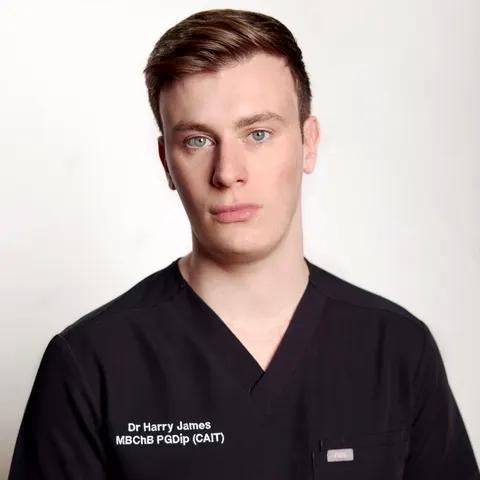
Aesthetic doctor and clinical director of Dr Harry Clinic, Chiswick and Covent Garden. ACE Group World faculty. GMC 7528423. About Dr Harry
Keep reading
Related articles
Lip Flip vs Lip Filler: Which Lip Treatment Is Right for You?
A lip flip changes position, lip filler changes shape. Dr Harry James compares the two treatments side by side: results, longevity,…
Lip Structure Explained: Why Technique Matters in Lip Enhancement
The lips represent one of the most complex and aesthetically significant features of the human face, serving crucial functions in…